


When it comes to feeding your baby, nothing beats breast milk. Breast milk provides the best start in life for babies. It has so many important nutrients and other special components in a combination that no other food provides.
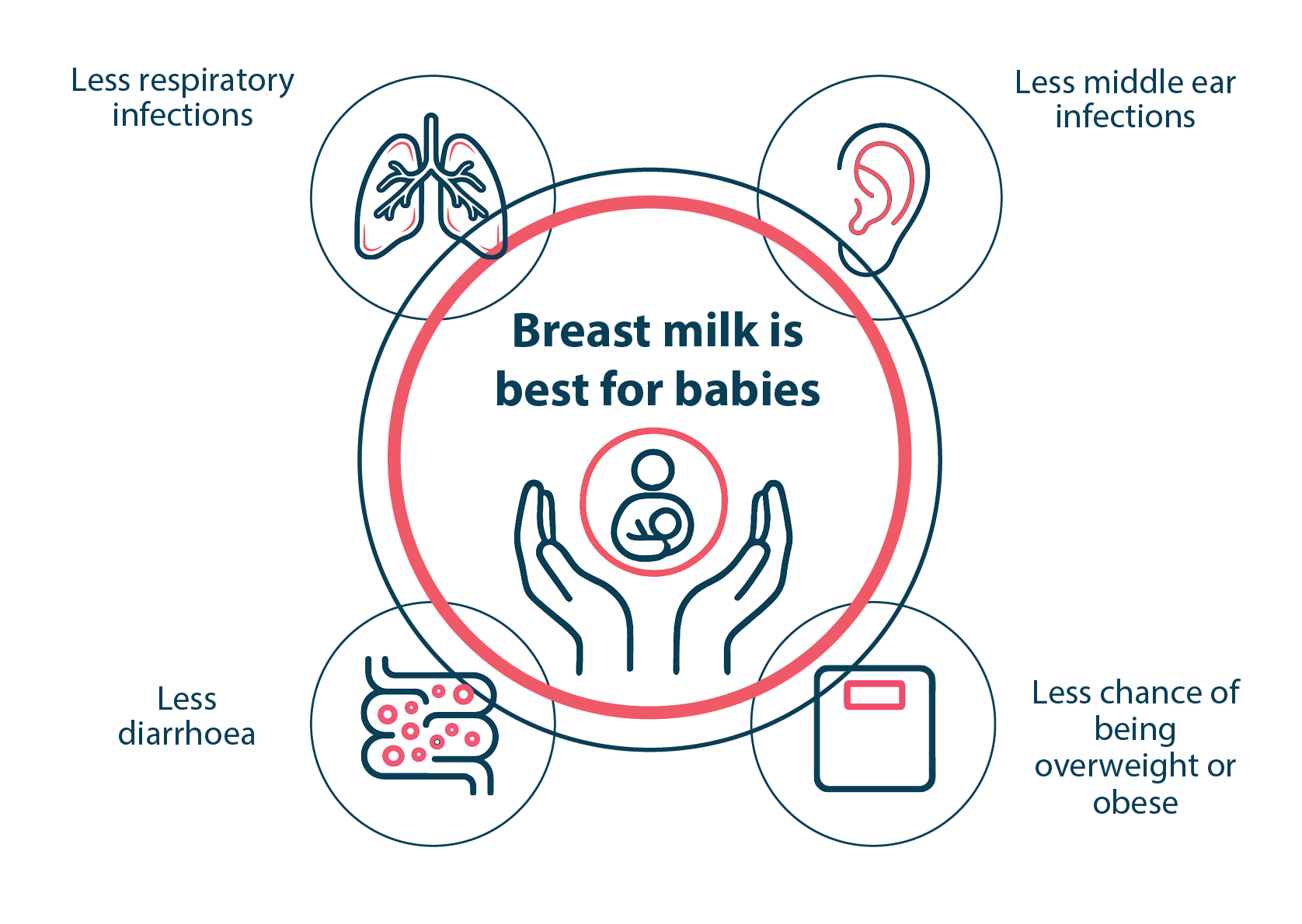
One of those unique components is Human Milk Oligosaccharides (HMOs). HMOs in breast milk play a vital role in the immune system development of babies. They nourish beneficial gut bacteria, and support a healthy digestive system to help protect against harmful gut bacteria. By supporting a healthy digestive tract, HMOs in breast milk contribute to the overall health and well-being of infants.
Understanding Human Milk Oligosaccharides (HMOs)
Human Milk Oligosaccharides in breast milk are unique complex carbohydrates known as natural prebiotics. HMOs make up a significant part of human milk, being the third largest solid component after lactose and fat.
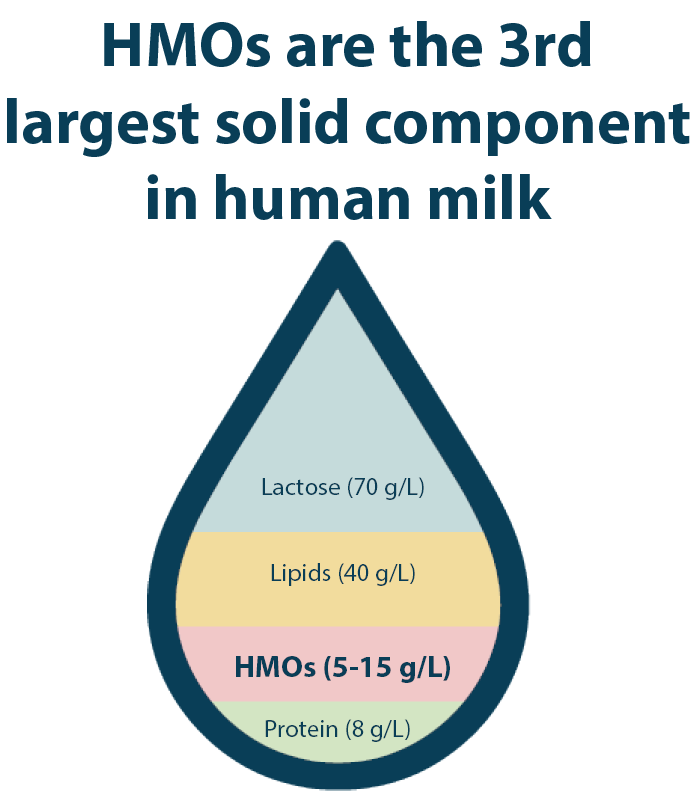
Over 200 HMOs have been identified so far, with a wide diversity in breastfeeding mums. The most abundant HMO is Oligosaccharide 2’-Fucosyllactose (2’-FL) with approximately 80% of women worldwide producing 2’-Fucosyllactose in their breast milk.
These HMO “prebiotics” are not to be confused with ‘probiotics’ which are beneficial bacteria that can be found in some foods and supplements – read more about ‘probiotics’ here.
HMOs and infant gut health
HMOs in breast milk support infant gut health by providing food for your baby’s beneficial gut bacteria, making them a natural ‘baby prebiotic’.
There are many different types of beneficial gut bacteria, with Bifidobacteria and Lactobacillus being the more common types. Breastfed babies gut bacteria is made up mostly of Bifidobacteria and Human Milk Oligosaccharides have a big role to play in that, as they are an excellent source of food for these friendly bacteria.
Supporting a healthy digestive system by feeding the good bacteria, where approximately 80% of our immune cells live, is a way HMOs support the baby immune system.
HMOs and the newborn immune system
From the moment your little one is born, early exposure to different things triggers the newborn immune system to start defending for itself. In Australia, most babies start on breast milk, which is fantastic as breast milk not only nourishes your baby, it also contains immune cells, growth factors and special bioactive components such as HMOs that all support a newborn immune system.
Infancy is a critical period for immune system development and nurturing early defence mechanisms is key. HMOs in breast milk have been shown to support the developing immune system in these four ways:

What is the gut barrier and how do HMOs in breastmilk help it function?
The gut barrier is a crucial part of your baby’s digestive system. This protective barrier or layer that runs all along the gut and intestines is one of the main defence mechanisms for our body. When strong and functioning, it’s job is to keep harmful substances, pathogens, and toxins from entering the bloodstream while letting all the good stuff, like nutrients in to be absorbed. This barrier is essential for a growing baby as it supports the absorption of nutrients, the development of a healthy immune system, and overall well-being. Human Milk Oligosaccharides (HMOs) play an important role in enhancing the function of the gut barrier. As food for the good bacteria in your baby’s tummy, HMOs promote the growth of beneficial gut bacteria which in turn strengthens the gut lining. By strengthening and reinforcing the gut lining, HMOs gently support immune responses by reducing the risk of infections and inflammation.
Frequently asked questions about human milk oligosaccharides
What is HMO?
Human milk oligosaccharides (HMOs) are complex carbohydrates that are found in high concentrations in human breast milk. They are the third most abundant solid component in breast milk, after lactose and fat. HMOs in breast milk serve several important functions, including having a prebiotic effects (promoting the growth of beneficial bacteria in the infant's gut, helping to establish a healthy microbiome); immune support, and overall health and development of infants, particularly during the early stages of life.
Where do they get human milk oligosaccharides?
Human milk oligosaccharides (HMOs) are naturally occurring carbohydrates found in human breast milk. They are produced by the mammary glands of lactating women and serve as prebiotics, promoting the growth of beneficial gut bacteria in infants. HMOs play a crucial role in supporting immune function and overall health. While they are primarily sourced from breast milk, some HMOs have been reproduced on a commercial scale to be identical to those in breast milk. Parents seeking to provide HMOs for their infants should aim to consume breast milk, or talk to their healthcare professional about external HMO sources that can be consumed.
Are human milk oligosaccharides (HMO) prebiotics?
Yes, human milk oligosaccharides (HMOs) are classified as natures original prebiotic. HMOs benefit the breast fed infant by selectively feeding the growth of beneficial bacteria, such as bifidobacteria, in the intestinal microbiome of infants. This not only helps establish a healthy gut environment but also supports the immune system and overall health in infants. This means HMOs play a crucial role in the nutritional and developmental benefits of breastfeeding.
What is another name for human milk oligosaccharides?
Human milk oligosaccharides may also be known by “HMOs” or in some scientific papers they may be known as "human milk glycans”. These terms are interchangeable, and all refer to the complex carbohydrates found in human breast milk that provide various health benefits for infants
Are HMOs found in cow’s milk?
No, HMOs are not naturally found in cow's milk. While cow’s milk does contain some complex carbohydrates, that are not structurally the same as HMOs. HMOs are naturally present in human breast milk, where they play a crucial role in supporting infant health by promoting the growth of beneficial gut bacteria and supporting immune function. Some structurally identical HMOs have been produced and are available in some infant formula and supplements.
What are the differences between HMOs from breastmilk and HMO supplements in formula?
HMOs in a mum’s breast milk are naturally occurring and provide the best start for babies. HMOs in breast milk vary in composition and quantity and early research indicates they are uniquely tailored to meet the specific needs of infants. Scientific advances have resulted in a selection of HMOs being produced that are structurally identical to those found in breast milk. These structurally identical HMOs have been added to some infant formula and may mimic some of the beneficial properties found in breast milk, but don’t fully replicate the diversity found in breast milk.
Is HMOs the same as colostrum?
No, HMOs and colostrum are not the same. Colostrum is the first form of milk produced by mums immediately following delivery, rich in antibodies and nutrients. HMOs are specific types of carbohydrates found in breast milk, including colostrum, but they serve different functions in supporting infant health.
Are HMOs supplements safe?
Advances in science and technology has enabled the production of HMOs that are structurally identical to those in breast milk. Some of these HMOs have been shown to be safe to add to infant formulas and are available in some infant formulas in Australia.
Related articles

Baby Probiotics for Newborns and Gut Health
Wondering how to support your infant's gut health? Learn how baby probiotics may help.
6 mins to read

Navigating Infant Ear Infections
One of the most common infections in children between six months and three years is a middle-ear infection called otitis media. Learn more.
9 mins to read

It is important to know what to expect in a nappy so you can then know when your baby’s poo is abnormal and may need healthcare professional advice.
2 mins to read
Related tools

Want to keep track of your child’s growth? Log the weight and height of your child from birth to 3 years of age. The perfect resource for your next healthcare professional checkup.


