


Navigating Sibling Rivalry in Childhood
As children grow, they may feel threatened by the arrival of a new sibling or perceive a shift in their parents' affection. However, there are several strategies parents can employ to help create a positive relationship between siblings, ensuring that their bond remains strong despite the occasional squabbles.
What is sibling rivalry?
Sibling rivalry or sibling competition refers to the competitive and often unfriendly relationship between siblings. Sibling rivalry can occur at any age but is particularly common between a preschooler and their younger sibling. This rivalry can manifest in various ways, including:
- Fighting with sibling over toys or belongings
- Crying to parents about their sibling's behaviour
- Teasing or name-calling
- Competing for parental attention
- Refusing to share or cooperate during play
When does sibling jealousy typically start?
Sibling jealousy can begin as early as the arrival of a new brother or sister. For instance, a preschooler may feel neglected when parents shift their focus to the newborn, leading to feelings of jealousy. Some common examples of how your preschooler might feel jealous of their baby sibling:
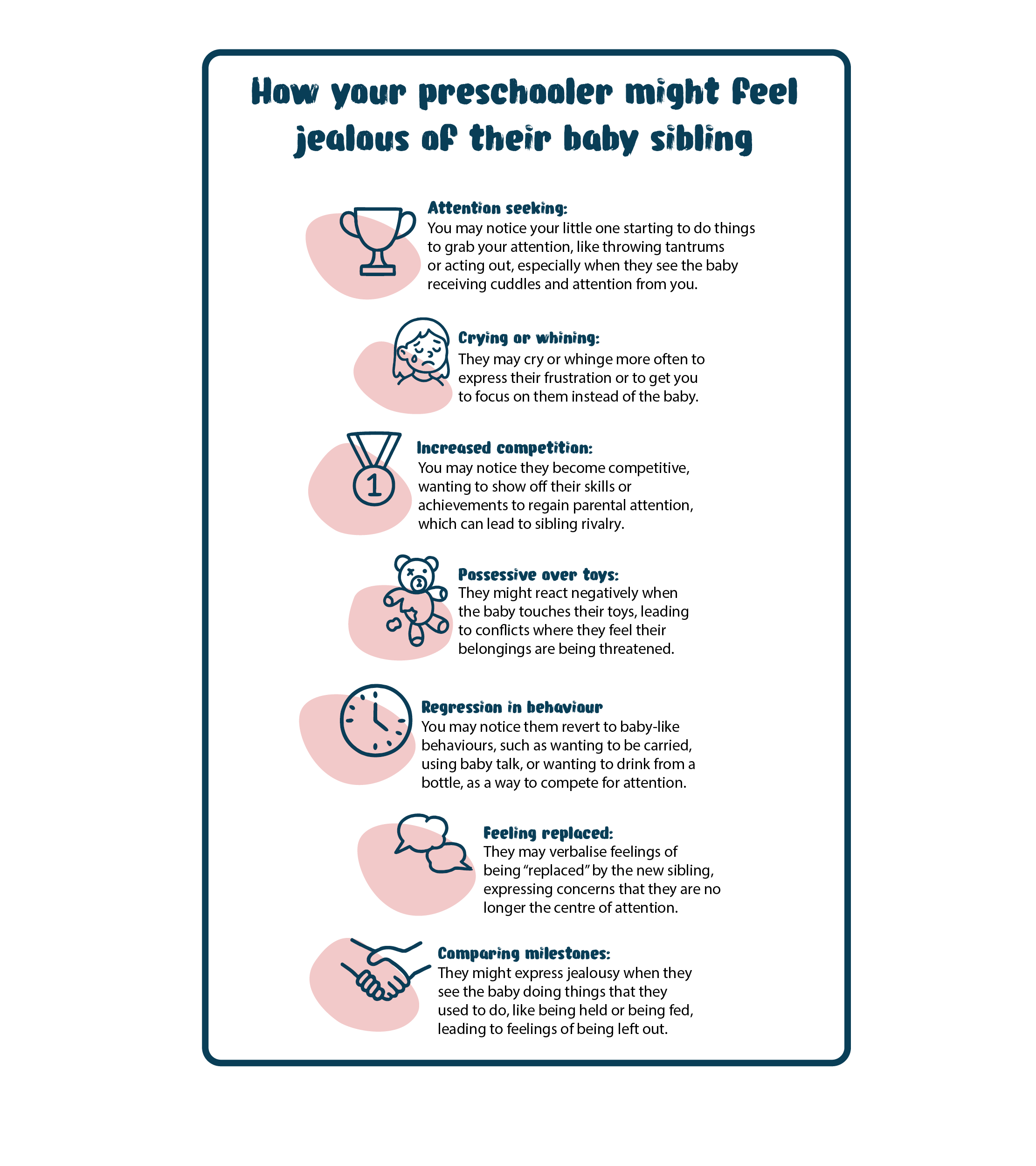
As both children grow into toddlerhood or beyond, sibling rivalry can escalate, with both verbal and physical fights becoming more common. While these altercations can be concerning, they also present valuable opportunities for learning and development. Through conflict, children can learn important social skills, such as negotiation and compromise.
Why do siblings fight?
Every child will have their own reasons for sibling frustration or jealousy and this will vary between kids.
Common causes of sibling fights
While every child is different there are some common causes of sibling rivalry including:
- Feeling left out: One sibling may feel excluded from family activities or conversations, leading to resentment.
- Attention seeking: Children may compete for their parents' attention, which can result in conflict.
- Miscommunication: Misunderstandings between siblings can lead to arguments over seemingly trivial matters.
- Personality clashes: Different temperaments and personalities can create friction, especially if one sibling is more dominant.
What should I do when my children start fighting?
Sibling rivalry offers a golden opportunity to teach emotional regulation and conflict resolution skills. Here are some strategies to help when siblings fight:
- Teach emotional regulation: Encourage your toddler to express their feelings verbally rather than through physical actions. For more tips, refer to our article on Teaching Emotional Regulation Skills to Preschoolers.
- Promote positive relationships: Emphasise the importance of a good sibling relationship through physical and verbal affirmations. For additional guidance, see our article on Positive Parenting.
- Encourage social skills: Help children understand how to interact with peers, preparing them for future social situations. Their ability to play friendly, negotiate and share with other kids is an important part of choosing between preschool or daycare and what will work best for them.
What can I do to help my kids have a positive sibling relationship?
It’s important to know that sibling fights are a normal part of growing up. Developing empathy and understanding takes time and patience. Here are some key tips to help encourage your kids to have a positive sibling relationship:
- Teach flexibility: Encourage your little one to be adaptable and not overly concerned with fairness.
- Prioritise one-on-one time: Spend individual time with each of your kids to make them feel valued.
- Promote team culture: Encourage a sense of teamwork within the family, and help siblings to support each other instead of fighting with their sibling.
- Prepare for new siblings: Help your older kids adjust to a new family member by involving them in preparations.
Family and sibling bonding activities for preschoolers
- Scavenger hunt: A fun way to work together, encouraging cooperation and teamwork.
- Jigsaw puzzles: Promotes problem-solving skills while working together.
- Simon says: A game that helps them with listening skills and encourages laughter.
- Hot potato: A fun, fast-paced game that promotes sharing and taking turns.
When should I seek professional help?
If you notice aggressive behaviour (either verbal or physical) that seems beyond normal sibling rivalry, it may be time to consult a health professional.
Signs that a sibling rivalry may be unhealthy
- Frequent physical fights that lead to injury
- Persistent verbal abuse or sibling bullying
- Emotional distress in one or both siblings
- Difficulty in resolving conflicts independently
A healthcare professional who specialises in childhood mental development can help you and your child navigate their emotions better. They can help develop healthier coping strategies, ensuring that sibling relationships can be a strong and positive influence throughout their life.
Frequently asked questions about sibling rivalry
How can I prepare my child for the arrival of a new sibling?
Preparing your child for a new sibling can be an exciting journey. Start by talking about the baby early on. Share stories about babies and how fun it is to have a brother or sister. Involve your child in preparations, like picking out clothes or decorating the nursery. You might also consider reading books about new siblings together. It helps them visualise what’s coming. Lastly, reassure them that they’ll still get lots of love from you, even with the new arrival.
How can I stop siblings from fighting
Stopping sibling fights can feel like a full-time job! Setting clear rules about acceptable behaviour from the beginning will help, and remind them of these when tensions rise. Encourage them to express their feelings with words instead of actions. You can also create opportunities for teamwork, like building a fort together or playing cooperative games. When they do get along, praise them! Positive reinforcement goes a long way in encouraging good behaviour.
Do siblings of the same gender experience worse sibling rivalry?
No, sibling rivalry can happen regardless of gender. It really depends on the individual personalities, the dynamics of the siblings involved, and even their environment. The key is to encourage a supportive environment where all siblings feel valued, no matter their gender.
Do families with more than two children experience sibling rivalry?
Absolutely! In larger families, sibling rivalry might even be more pronounced simply because there are more personalities and dynamics at play. Each child may feel they need to compete for attention, which can lead to conflicts. However, with good communication and family bonding activities, these rivalries can be managed and even turned into opportunities for growth.
Can a child be jealous of a newborn sibling?
Yes, it’s quite common for children to feel jealous of a newborn sibling. They may feel like they are losing their parents attention or worry about being replaced. It’s important to acknowledge these feelings and reassure them that they are still loved and valued. Encourage them to be involved with the baby, like helping with simple tasks, to help ease those jealous feelings.
What is the root cause of sibling rivalry?
Sibling rivalry often stems from competition for attention or toys. Children may also feel threatened by changes, such as a new sibling or shifting family dynamics. Each child’s personality and temperament can further influence how they express these feelings, leading to rivalry.
What age is sibling rivalry the worst?
Sibling rivalry can peak at different ages, but it often becomes more noticeable between the ages of 2 and 5. During this time, children are developing their social and communication skills and may struggle with sharing, and cooperation. However, sibling rivalry can occur at any age, especially during significant life changes, like moving or the arrival of a new sibling.
Sources:
Pregnancy, Birth & Baby Website. Accessed at Sibling rivalry | Pregnancy Birth and Baby
Related articles

Teaching Emotional Regulation Skills to Preschoolers
Emotional regulation in preschoolers is an important part of every child’s development.
8 mins to read

Understanding Positive Parenting: Strategies and Benefits
Positive parenting is a philosophy centred on nurturing and guiding children with love, respect, and empathy.
5 mins to read

Toddler activity ideas for your 18-24-month-old
Follow these five games to keep your toddler amused.
4 mins to read
Related tools

In 16 countries 8,000 mums and dads were interviewed. What’s it really like to be a new parent today?

Trying to find the perfect name? Get inspiration and name ideas from our tool below to get unique baby girl names or baby boy names.
Related recipes


