


At around 10 months, your baby is ready for exciting new food experiences and they’ll be able to eat a wider range of foods. Introducing new flavour combinations to your baby’s meals can be fun and rewarding. This stage is all about developing independence—picking up small pieces, lifting food to their mouth, and learning what fits. If you’re looking for 10-month-old food ideas, a practical feeding schedule, or inspiration for dinner for your 10-month-old, you’re in the right place. We’ll share tips and meal ideas for 10-month-olds that make mealtimes safe, fun, and developmentally appropriate.
10 month old sample schedule for feeding
- Consistency: Lumpy, textural foods promoting chewing and soft finger food
- Introduce a range of temperatures: Cold, room temperature and warm (note never give babies hot food and always test the temperature yourself before giving it to your baby).
- Amount: The portion sizes can vary between babies and should change according to your their appetite, it may be approximately ¼-½ cup at meals and ½ cup snacks.
- Breastfed babies: Around 3-4 per day
- Formula fed babies: Check the label for guidance on number of feeds or ask your healthcare professional if you are unsure.
- Timing of solid food: After or between milk feeds.
- Frequency of solid food: Approximately 3 times a day after milk feeds, plus an optional snack between milk feeds.
- Type of foods: Continue to choose iron-rich foods such as red meat, chicken, fish, and iron-fortified baby cereal. Increase variety of foods, add legumes, variety of grains and cereals, fruits such as berries and citrus fruits, and stronger flavoured vegetables such as onion, and harder to eat vegetables such as sweet corn, shredded salad greens, spinach, tomato. Introduce eggs, and ground nuts and seeds, as well as cooked milk products in small amounts.
- Always supervise your baby when they are eating.
Check out our recipes and 10-month-old meal ideas.
Note: Always seek individualised advice when you have a family history of allergy, intolerance, coeliac disease or your baby is suspected to have feeding delays (such as tongue tie or any developmental delays).
10-month-old meal ideas: helping your baby master self-feeding
At this age, it’s likely that your baby will be able to grasp and pick up small pieces of food. This finger-feeding stage is messy and fun! It is also a crucial part of developing motor skills and increasing confidence and independence. Eating food with your fingers seems easy to us as adults, but for a baby there are a lot of steps they will need to learn and practice. You may notice that your 10 month old is now reaching these stages:
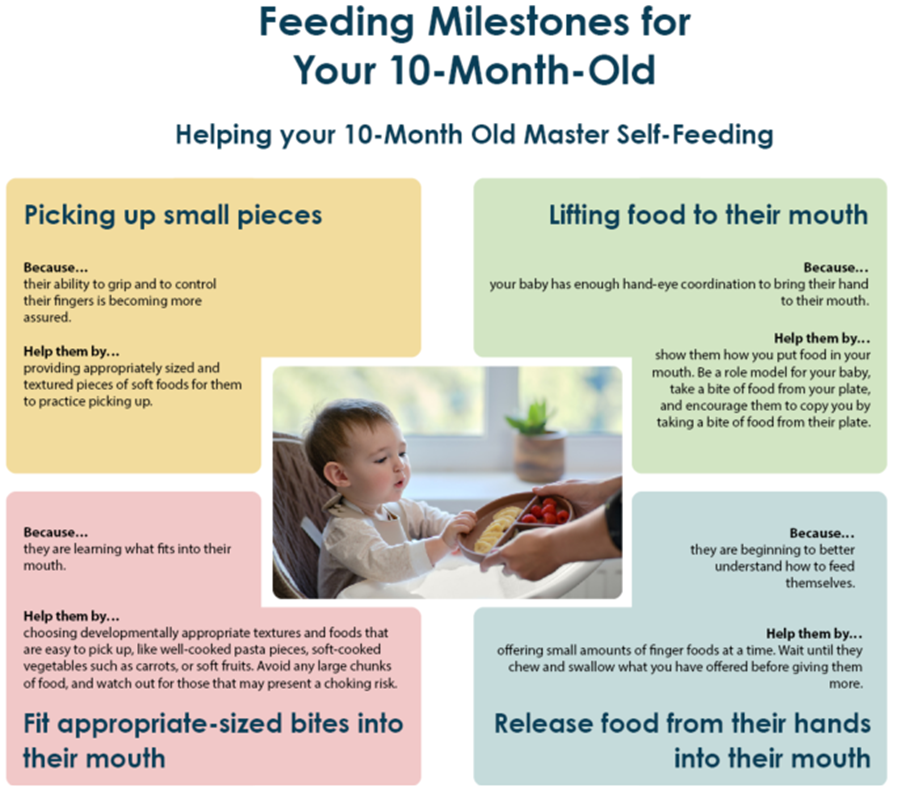
Tips for successful eating
All your baby’s senses are in gear to respond to the new textures, flavours, and smells that are coming their way every day. As your little one gets older, they will become more vocal in letting you know what they want. They’re deciding how much they’ll eat while you decide on foods for your 10 month old.
Here are some pointers for ensuring mealtimes are pleasant and relaxed.
- Sit down and eat with your baby at the table, and make their mealtime your family’s mealtime. Children should be seated and supervised when eating.
- As your baby is still learning to manage more textures of foods, offer soft foods in small, diced pieces.
- 10-12-month-old babies still have small tummies, so it might work best to offer three meals and an optional snack each day.
- Early on, your baby may begin improving their abilities to drink from a cup and handle a spoon. As they develop, they may be able to spoon-feed themselves with a bit of help.
- Keep offering a variety of foods to your baby. Eating a banana a day may be good, but eating a variety of fruits, like peaches, plums, cherries, and raspberries throughout the week is more fun! If your baby doesn’t seem keen on a certain fruit or vegetable, try offering it on another day. It may take as many as 8-10 tries for babies to accept some new foods. You may still offer only one new food to your baby at a time so you can identify if there are any intolerances.
Special occasion foods for 10 month olds
Treat foods are part of life and it’s probably not feasible to restrict them completely. Teaching your child why certain foods are treats and not every day foods is important.
Many cultures associate certain foods with special occasions or holidays. It’s important to teach your baby that the foods offered at these festive events are not usually part of your everyday meals. These foods can be considered ‘special occasion foods’. By exposing your baby to these types of foods in the context of celebrating, you’re letting them know that food is part of your culture. Practice your responsive parenting feeding style by not pressuring them to eat special occasion foods. At the same time try to be relaxed about them having a taste, without praising them if they decide to try some.
By letting your baby know, for instance, that birthday cake only appears when there is a birthday, the message they receive is not one of total restriction of these types of special occasion foods, but of the link between food and family or cultural events.
The birthday cake question
Your baby’s first birthday is fast approaching, something all the family is sure to be looking forward to. What a milestone, you’ve been parents for a year! Time goes so quickly. You may be planning a party for them and also be invited to other babies’ birthday parties or family gatherings. So now is a good time to consider the approach you will take to the sweets or cakes that are often served at these occasions.
Portion size of food for 10 month olds
It’s easy to overestimate the amount of food you need to give your baby. Remember they still have a small tummy so portions will be significantly smaller than those you give yourself. Learn their hunger and fullness cues and trust them when they want to stop eating, or they’re asking for more. Always try to maximise the nutrient value of the food you offer.
Frequently asked questions about 10 month old food ideas
How much should a 10-month-old eat?
At 10 months old, your baby’s food menu will continue to grow in diversity and volume. The types of foods you introduce, and the volume of food will increase over time but should still include a variety of foods from all the food groups. All children are different, however at around 10 months of age you may start to notice your 10-month-old meal plan is growing in size and includes around ¼ to ½ cup of solid food per meal, 3 times a day, along with breast milk or formula. Check out this great corn fritter recipe your 10 month old will love.
How much should a 10 month old eat?
At 10 months, your baby’s main source or nutrition will still be coming from breast milk or infant formula. Offer solid food after their milk feed about three times a day. The portion sizes can vary and should change according to your baby’s appetite, but a good rule of thumb is to offer around ¼ to ½ cup of food per meal. It's important to focus on a variety of foods to ensure they get the nutrients they need for healthy growth and development. Check out our cheesy pea and mushroom risoni recipe, perfect for your 10-month-old.
What should a 10 month old be eating?
Continue to choose iron-rich foods such as red meat and iron-fortified baby cereal. Introduce your 10 month old to a variety of solid foods, including pureed fruits and vegetables, soft cooked grains, and proteins like finely shredded chicken or fish. You can also add dairy products like yogurt and cheese. Aim for a balanced diet that includes different food groups to meet their nutritional needs.
What finger foods can a 10 month old eat?
Finger foods are a great way for your baby to practice self-feeding. Suitable options include soft fruits like bananas and avocados, cooked vegetables such as sweet potatoes and peas, small pieces of cheese, and soft bread or toast. Make sure the pieces are small enough to prevent choking and easy for little hands to grasp. For some more 10-month-old food ideas, check out our recipes.
Can a 10 month old baby eat table food?
Yes, a 10-month-old can eat table food, as long as it is soft and cut into small, manageable pieces. Foods like mashed potatoes, scrambled eggs, and small pieces of cooked pasta are great options. Always ensure that the food is safe and appropriate for their developmental stage to prevent choking hazards and always sit with your 10-month-old at the table to supervise. There are still some foods that should not be included in their diet until 12 months of age, including honey and raw egg.
Sources:
- Australia New Zealand Food Standards Code - Standard 1.2.7 - Nutrition, Health and Related Claims (legislation.gov.au)
https://www.legislation.gov.au/Details/F2013L00054
Related articles

Baby-Led Weaning Foods to Explore with Your Little One
BLW is an alternative approach that has gained traction over the last 10-15 years which is a model of infant feeding which promotes self-feeding from 6 months of age in place of the traditional par
9 mins to read

Baby Led Weaning – What is BLW?
Apart from the traditional 3 stage process of introducing solids, you may find other ways or methods to follow.
11 mins to read

The Importance of Iron for Babies
An Australian nutrition survey showed that 75% of infants aged 6-12 months were not consuming enough iron.
5 mins to read
Related recipes


Savoury Mini Muffins - Veggies