


Reasons for expressing breast milk
In many instances, breast milk direct from mum will be more convenient and provides many added benefits such as skin-to-skin bonding. Early use of bottles, especially before the first breastfeed, can interfere with the natural processes of breastfeeding by reducing the infant’s sucking capacity and the stimulation of the mother’s breasts. However, there are many situations in which expressing breastmilk and feeding from a bottle may be required. Some of the most common reasons you may want to use a breast pump include:
- To stimulate your milk production when you are unable to breast feed your baby directly after birth, such as when your baby is premature or your baby is unable to suck adequately.
- You or your baby are in hospital and unable to feed them directly.
- To maintain your milk supply when you are away from your baby (eg. after returning to work).
- You are leaving your baby with your partner or a baby sitter while you are out.
- Many mothers like to store breast milk for emergencies.
Some essentials for breastfeeding
Breastfeeding bras and pads
A breastfeeding bra gives your baby easy access—one with flaps that open easily for breastfeeding. Although you will want to buy a few before you give birth, your breasts will grow once your milk has come in so you might want to wait until after the birth to buy a few more. The band size should fit snugly on the loosest hook. Ask for assistance in the shop with someone experienced with fitting breastfeeding bras. A breastfeeding bra should provide good support. Avoid those with under wires, these place too much pressure on the breasts and may lead to blocked milk ducts or mastitis (infected milk ducts).
Use breastfeeding pads that are absorbent and ventilate well. As needed, replace wet pads with dry ones to prevent chafing and bacterial growth.
Breastfeeding clothes
The idea behind breastfeeding clothes is to allow easy and comfortable access to your breast. There are specially designed breastfeeding blouses and sleepwear that have side slits to help you breastfeed comfortably, and discreetly if needed. Or simply invest in some inexpensive stretchy t-shirts that can easily be pulled down on one side or shirts with buttons down the front.
A comfortable breastfeeding chair
Select a chair that provides good back support and has armrests to help you comfortably sit up straight and your feet reach the floor. Over time, your body (especially your back and neck) will suffer if you’re posture is not well supported while you feed.
A good breastfeeding pillow
A good breastfeeding pillow adds comfort to both you and baby while breastfeeding. There are plenty of pillows out there specifically tailored to breastfeeding, but any firm pillow will do. A breastfeeding pillow assists by positioning baby at breast level, supporting their weight and helping maintain your proper posture as you won’t have to lean over or strain your back while breastfeeding. You may find a pillow is only necessary for the first few months while your baby is smaller and feeds are longer.
Some essentials for expressing breast milk
Choosing a pump
There are a large range of breast pumps on the market. You can choose from electric or hand held pumps and your choice may depend on how much you require or intend to use it.
Storage devices
Sterilised glass or plastic containers and sealable storage bags are essential when expressing breast milk, as they provide a safe and convenient way to store, freeze, and transport milk while preserving its nutritional quality and freshness for their infants. Always check the manufacturers instructions on whether the storage device is already sterilised or you need to do that yourself.
Baby bottles and teats
There are a large variety of bottles and teats available and many parents find they need to try a range of teats to find which one your baby will accept.
Steriliser for cleaning all equipment
Breast pump sterilisation and sterilisation of bottles and teats is essential if you are feeding using expressed breast milk. Equipment will need to be dissembled and sterilised before each use. Always check the label of your equipment for instructions on how to sterilise all the parts. There is generally two methods of sterilisation: Either using cold water and adding a non-toxic sterilisation solution, available through pharmacies; or by using heat via boiling water, a microwave, or electric steam steriliser. If you are not using the equipment again straight away, you can simply wash the equipment and then sterilise before the next use.
Expressing breast milk by pump
Choosing the best pump and method of expressing is an important personal choice.
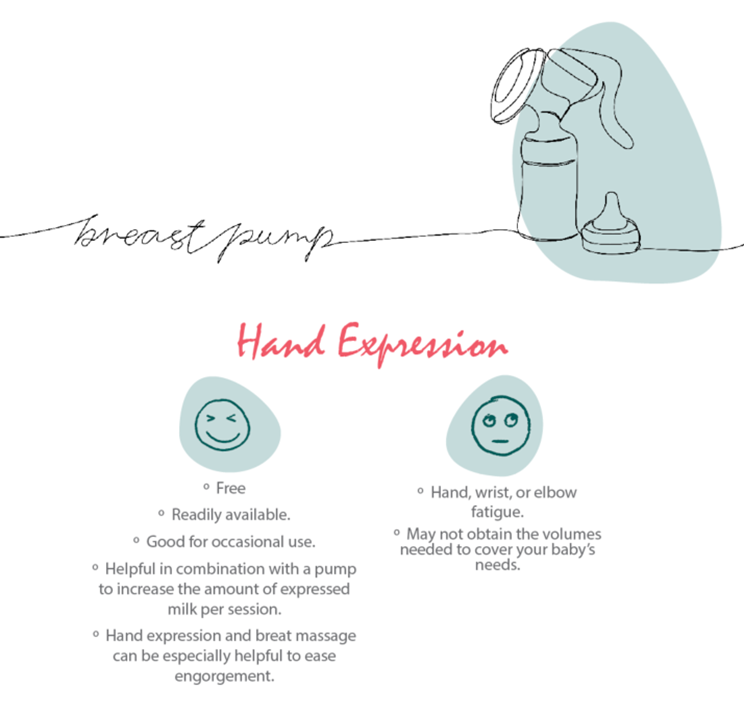
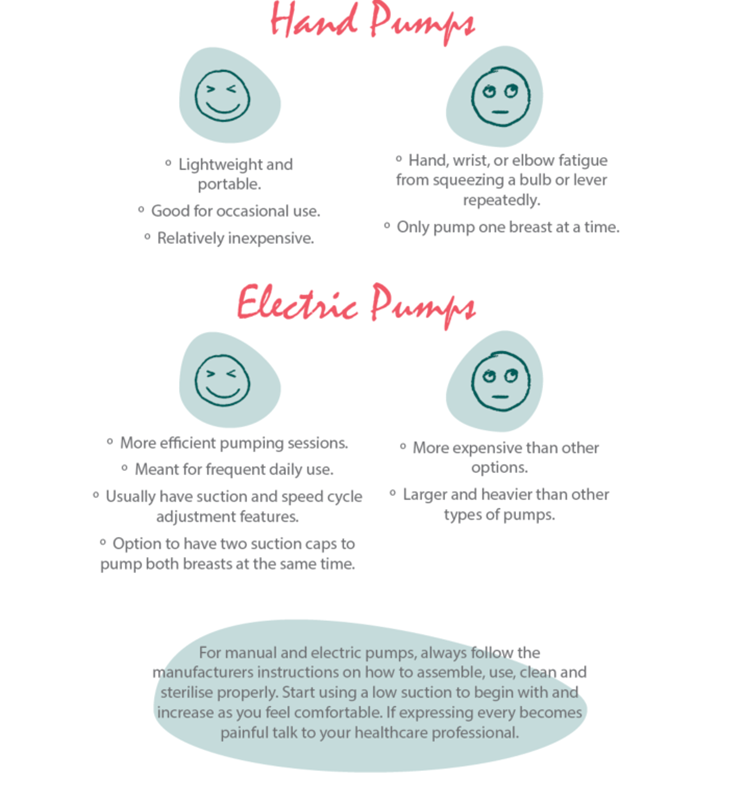
5 Steps to a good expressing technique using a breast pump
- Gently massage first – Before (and during) your pumping session, massage your breast(s) to help increase the amount of milk you produce. This can also help drain your breasts properly.
- Choose the right flange size – Whether you’re using a manual or electric pump, check the flange (the cone-shaped part) fits completely over each breast and is comfortable. If not, or you experience discomfort during or after pumping, you might need a different size.
- Think about the suction pattern – Start with small, frequent cycles to stimulate milk flow, then slow down the cycle speed and increase the suction levels. This pattern mimics the way a baby feeds. Some pumps have a program that does this automatically.
- Pump until your flow stops – The length of time you need for a pumping session will vary so keep going until your flow slows or stops. Massage and compress your breast before starting again.
- Break suction carefully – At the end of your session, make sure your pump is set at negative suction then place your finger between the flange and area around your nipple to break the final suction.
Breastfeeding and expressing milk - Is your baby getting enough?
How do I figure out a baby feeding schedule to know that I'm feeding them enough? It's a common question. While new babies need to feed every two to three hours, there really is no such thing as a set baby feeding schedule. Instead, every baby has their own cues that tell you when to feed and how much. To know when, look for hunger cues like these:
- Crying or fussiness;
- Rooting for a nipple; or
- Sucking on fingers.
Soon you'll recognise your baby's special way of saying “I'm hungry”. To know if your baby's eating enough, count your baby's nappies. Six or more wet nappies a day and three or four dirty ones is average in these early months. Your baby will tell you when they’re finished with fullness cues such as:
- Slowing down feeding pace;
- Ignoring the nipple;
- Fidgeting; or
- Falling asleep.
If you are ever concerned that your little one isn’t getting enough milk, talk to your healthcare professional.
Frequently asked questions about breastfeeding and expressing milk
How soon can I breastfeed after pumping?
A lot of mums will breastfeed first, then pump any milk that is still left. If your breasts feel full, it's often a good time to pump to release a little bit of pressure before you breastfeed your baby directly from the breast.
How to breast pump and breastfeed?
To breast pump and breastfeed, start by breastfeeding your baby when they are hungry. After a feeding, you can pump to collect any remaining milk. This way, you can build a stash for later while ensuring your baby gets fresh milk directly from the breast.
How to combine breastfeeding and pumping?
Combining breastfeeding and pumping can be done by establishing a routine. Breastfeed your baby on demand, and pump after feedings to maintain or increase your milk supply. You can also pump during times when your baby sleeps, ensuring you have milk available for when you need it.
How to use a breastfeeding pump?
Always follow the manufacturer’s instructions on how to use, clean and sterilise a breast pump. Start by assembling the pump according to the instructions. Make sure you're comfortable, then place the flange over your breast and commence pumping. Adjust the suction to a comfortable level and pump until you feel empty.
When to pump when breastfeeding?
It's best to pump after breastfeeding sessions or when your breasts feel full. If you're returning to work or want to build a milk supply, consider pumping in between feedings or at the same time each day to establish a routine.
Sources:
- Health Direct Website. Accessed at Expressing and storing breast milk | healthdirect
- Raising Children Website. Accessed at Expressing breastmilk & storing breastmilk | Raising Children Network
Related articles

How Often does a Newborn Feed?
The first few months in particular you will notice huge changes in your baby’s growth and development; there is truth in the cliché ‘they grow so quickly’.
5 mins to read

Although breastfeeding is a natural way to nourish your baby, it’s a way of feeding that both you and your baby must learn together. It takes time, patience and practice.
6 mins to read

Breastfeeding is nature’s intended way to feed a baby and the health benefits of breast milk and the benefits of breastfeeding are evident for baby and mum.
6 mins to read
Related tools

Want to keep track of your child’s growth? Log the weight and height of your child from birth to 3 years of age. The perfect resource for your next healthcare professional checkup.


